 Jinmai Plastic

Compare welded and riveted corrugated plastic boxes by product clearance, handling requirements and sample results. Welding avoids separate fastener heads at the seam, but the seam itself still needs inspection. Rivets introduce hardware and holes whose position and installed condition must be specified. Neither method is automatically stronger, foldable, repairable or watertight. Approve the joint together with the sheet specification and finished box under its intended handling conditions.
For a buyer comparing two quotes, the useful question is: which complete construction meets the job, and what evidence will confirm it? This guide focuses on polypropylene (PP) corrugated boxes, also called PP hollow-sheet boxes, used for industrial parts and returnable transport packaging.
Download the joint-comparison worksheet (CSV)
What is the difference between a welded and a riveted PP box?
A welded joint joins compatible thermoplastic surfaces using a controlled welding process. The sheet combination, overlap, access for tooling and process settings matter. Coroplast identifies heat or sonic welding as options for joining its corrugated plastic sheets with appropriate tools; Primex also lists heat and sonic welding among the converting methods for its corrugated products. These are material-manufacturer references, not test results for a particular Jinmai box. See Coroplast’s fabrication FAQ and Primex’s corrugated plastic overview.
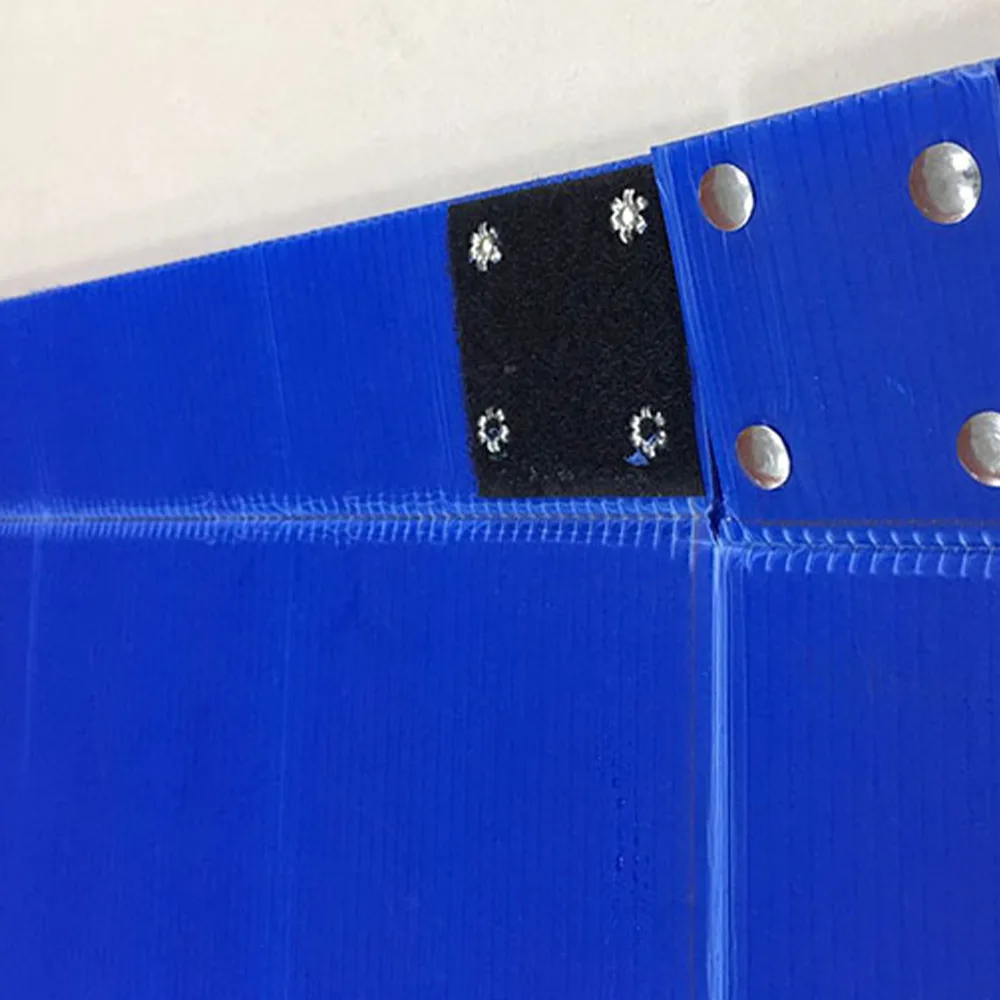
A riveted joint mechanically holds panels or components together through holes. Its behavior depends on the actual fastener, head and backing arrangement, hole location, spacing and surrounding sheet. “Riveted” alone does not identify the hardware material, installation quality or allowable load.
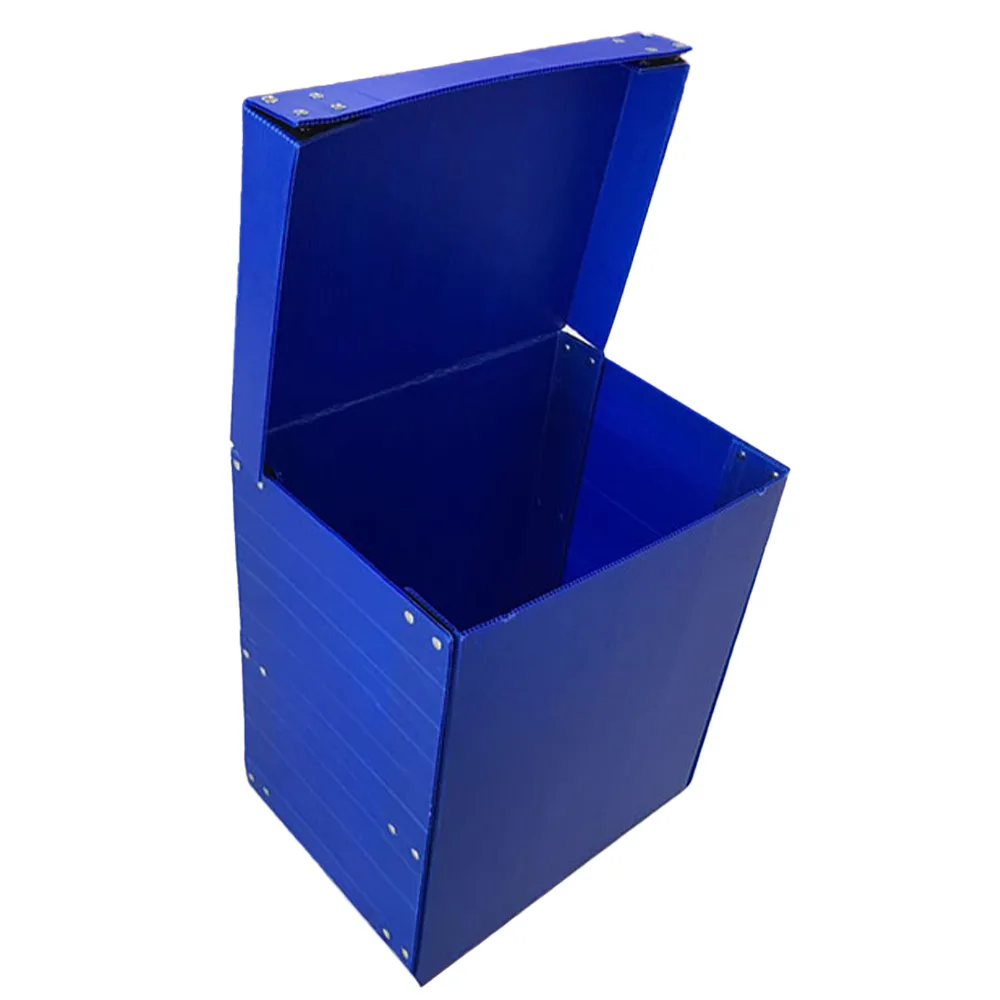
Some boxes combine welded seams with fastened handles, lids or other accessories. Ask the supplier to mark each joint location on the drawing; a single label for the whole box can hide important differences.
Welded vs. riveted corrugated plastic boxes: buyer comparison
| Decision factor | Welded construction: what to check | Riveted construction: what to check |
|---|---|---|
| Product-facing surface | Check the seam profile, edges and any local distortion; absence of rivet heads does not guarantee a smooth contact surface. | Locate both sides of every fastener; check projection, rough edges and clearance to the part or insert. |
| Load and handling | Check whether the joint opens or the adjacent sheet deforms during the specified lift and support conditions. | Check fastener movement, hole enlargement and sheet damage under the same handling conditions. |
| Folding and setup | Confirm permanent seams leave the required folding path free. | Confirm hardware does not obstruct creases, overlapping panels or the return-pack arrangement. |
| Cleaning and drying | Inspect overlap pockets, exposed flute ends and the complete seam after the proposed cleaning cycle. | Inspect around heads, backing pieces, holes and panel overlaps after the same cycle. |
| Repair policy | Ask whether repair is permitted, how it is performed and how the repaired box is accepted. | Ask how the specific fastener is removed and replaced; many rivets are not reusable and removal can damage the sheet. |
| Production consistency | Define the approved joint geometry and observable defects, plus any required sample testing. | Specify the hardware, location, quantity and installed condition, plus any required sample testing. |
| Cost comparison | Request a quote for the defined construction and required inspection. | Request the same scope, including hardware and assembly; compare return volume and replacement policy separately. |
A different overlap, sheet weight or handle position can change the comparison even when the joint method stays the same.
Start with the product and the handling route
Will the joint touch a painted, polished or delicate part?
Mark the product’s occupied space, including movement during loading and transport. Inspect the box with its actual dividers or protective inserts installed. A fastener head outside the nominal compartment may still become a contact point if a divider shifts. A welded overlap may also create an edge that needs to be kept clear of the part.
Ask for photographs of the inside and outside of each proposed joint, then check the physical sample with representative contents. Define the acceptable surface condition with your product team. Do not substitute “no metal” or “welded” for an actual product-contact requirement.
Where does the loaded weight go?
Record whether operators lift the box by hand holes, attached handles or its base, and whether a conveyor, shelf or pallet supports the full bottom. The load path is the route the weight takes through the box to those support points. A corner seam, handle attachment and bottom joint may carry different demands.
Specify payload, total loaded weight, load distribution, lift points and stack arrangement before requesting a joint recommendation. Do not translate a sheet thickness or an isolated seam pull result into a finished-box rating. Our corrugated plastic box load-capacity guide explains the information needed for that separate approval.
Must the box fold flat on the return trip?
Foldability comes from the complete arrangement of panels, creases, joints and closures. A permanent seam can be part of a foldable box if it does not block the intended motion; a riveted box can remain completely fixed. Request an assembly-and-collapse demonstration with the proposed lid and inserts, and record the return-pack dimensions. See the foldable vs. fixed box comparison for return-space planning.
Cleaning and repair: two assumptions to avoid
A welded PP box is not automatically watertight. Joining two surfaces does not establish that every corner, opening, handle cutout or exposed flute is sealed. If liquid containment is a requirement, describe the liquid, fill level, orientation, exposure time and acceptance method explicitly. A general industrial tote quotation does not establish that capability.
For boxes that will be cleaned, give the supplier the actual cleaning agent, concentration, temperature, contact time and drying procedure. Inspect the assembled box after the agreed exposure for retained liquid, residue, sheet changes and joint movement. Material resistance alone does not establish that the finished construction is easy to clean. Food-contact or other regulated applications require their own requirements and evidence.
A riveted box is not automatically field-repairable. Removing a permanent rivet may require tools and can enlarge a hole or damage the panel. Before treating repair as a purchasing benefit, agree on replaceable parts, removal method, replacement hardware and who may authorize return to service. Welded repairs likewise need an approved method and acceptance check.
If the intended policy is replacement rather than repair, write that into the comparison. A theoretical repair advantage has little value when your operation has no approved repair process.
What should the joint drawing specify?
Give each seam or attachment an identifier, such as J1 for the side seam and J2 for a handle attachment. Tie its requirements to the controlled drawing and approved sample. The following fields help make two quotations comparable.
| Drawing or approval field | Information to record |
|---|---|
| Sheet and panel configuration | PP grade or agreed material reference, thickness, grammage (GSM), flute direction and panel arrangement. |
| Joint location and geometry | Joint ID, overlap, position relative to edges and creases, and required clearances; state dimensions and tolerances where needed. |
| Welding specification | Agreed process reference, joint layout, relevant acceptance features and process-control responsibility. |
| Rivet or fastener specification | Type, material, size, head and backing details, hole location, spacing or quantity, and orientation. |
| Product-facing requirements | Which side faces the product, allowed protrusion or clearance, edge condition and any required cover or insert. |
| Acceptance and change control | Sample ID, drawing revision, test conditions, measurable criteria, inspection record and changes requiring reapproval. |
There is no universal rivet spacing or weld dimension for every PP corrugated box. Avoid instructions such as “use enough rivets” or “make a strong weld.” Ask the supplier to propose the details for review, then freeze the approved version. The drawing and tolerance guide covers dimensions and revision control in more detail.
How to compare two sample boxes fairly
Compare complete boxes built for the same intended job. Keep sheet specification, finished usable dimensions, payload, inserts and handling conditions consistent where practical. If the supplier changes the overlap or panel arrangement to suit a joint, record that difference: you are comparing two construction options, not isolating the effect of welding versus riveting.
- Identify both samples. Record drawing revision, material reference, joint details and photographs. Confirm whether the samples represent the proposed production process.
- Check empty and packed fit. Verify usable dimensions, product clearance, lid closure, divider seating and access for loading.
- Run the agreed handling sequence. Use representative contents or an agreed equivalent load, with the specified lift points and supports. Add stacking, transport exposure or repeated setup only as required by the actual route and approved test plan.
- Apply relevant service conditions. Where cleaning, temperature exposure or repeated folding matters, define the conditions, sequence and number of cycles before testing. Use an agreed number of samples; one demonstration is not a statistical service-life claim.
- Inspect and record the outcome. Look for seam opening, fastener movement, sheet tearing, hole enlargement, distortion, sharp edges and product marks. Record observations against the agreed pass/fail criteria and retain photographs.
Define what would stop the test, who approves the result and what changes require another review. For example, a hardware substitution or a change in sheet grammage may affect an already-approved construction. Passing a sample trial supports that documented configuration and test scope; it does not establish an unlimited payload or reuse count.
Download the joint-comparison worksheet
Download the joint-comparison worksheet (CSV)
The editable CSV has 24 comparison fields for requirements, welded and riveted proposals, sample evidence and approval notes. Open it in Excel or Google Sheets and complete it with the supplier. The result and acceptance cells are intentionally blank: the worksheet does not assign strength scores, preset tolerances or a preferred winner.
Use it before sample approval, then transfer the selected construction into your production drawing and purchase specification. For checking delivered boxes against that approved reference, use the separate receiving inspection checklist.
Frequently asked questions
Are welded corrugated plastic boxes stronger than riveted boxes?
There is no general winner. Sheet specification, joint geometry, manufacturing quality and the way the box is loaded and supported all affect performance. Compare the proposed finished boxes under the same documented use conditions; a process name alone is not a load rating.
Which construction costs less?
Request quotations against the same dimensions, sheet specification, quantity, accessories and acceptance requirements. Welding setup, hardware, assembly work and inspection can differ. Also compare return-pack volume and the agreed replacement or repair policy. There is no defensible universal price advantage without project-specific quotations.
Can ordinary glue replace rivets or welding on PP sheet?
Do not assume it can. PP is difficult to bond with many common adhesives. Specialized systems exist: for example, 3M identifies DP8005 for many low-surface-energy plastics, including many grades of PP. That is product-specific guidance, not approval for every sheet, joint or cleaning environment. Validate the exact combination and process before substitution.
Does metal hardware make a PP box suitable for ESD packaging?
Metal hardware alone does not establish the required electrostatic performance of the finished packaging. Specify the intended protection, product-contact arrangement and required verification for the complete construction. Use the ESD packaging specification guide when that requirement applies.
What should I send Jinmai for a joint review?
Send the drawing or target dimensions, sheet specification if known, payload and product photos, lift and support points, return-folding requirement, cleaning method, and restrictions on exposed hardware. Include photographs of any current failures and your acceptance criteria. Ask Jinmai which joint options are feasible for that construction and what sample evidence can be supplied.
For a standard starting point when comparing box constructions, review the standard corrugated plastic box structures alongside your approved joint details.
When planning workshop handling and return logistics, review both the joint design and whether empty boxes need to fold flat. A custom foldable corrugated plastic box or collapsible turnover tote and the Totes / Pallet Boxes range provide starting points for a construction review. Confirm the connections, folding sequence and handling method against the drawing or pre-production sample.
Request a construction review
Jinmai’s corrugated plastic box range and manufacturing overview provide the starting point for a custom box discussion. Send the completed comparison worksheet with your RFQ so the proposed joint, sheet and accessories can be reviewed together.