 Jinmai Plastic

Custom Foldable Corrugated Plastic Boxes and Collapsible Turnover Totes
Custom foldable corrugated plastic boxes, also called collapsible turnover totes, are reusable PP hollow sheet containers designed for storage, line-side handling and returnable transport. Die-cut crease lines let the box fold down when empty, so teams can return or store the packaging in a compact flat form. When opened, the panels form a structured container for parts, components, kits and other industrial goods.
Jinmai builds each tote from a customer drawing, sample or confirmed specification. The box can be supplied as a foldable body with optional dust cover, handles, label holder, printing, hook-and-loop closure, rivets or other accessories subject to sample review. Confirm the internal dimensions, folding direction, panel layout, load requirement and handling method before production.
What Is a Foldable Corrugated Plastic Box?
A foldable corrugated plastic box uses PP hollow sheet panels joined by die-cut crease lines and selected connection details. The panels fold inward for empty return, then open into a box for loading. This format helps buyers use available warehouse and vehicle space more efficiently during reverse logistics by reducing the space occupied by empty containers. Any freight saving depends on the return route, packing arrangement and charging method.
Foldable construction is suitable when the container travels back empty, is stored between production cycles, or must move between workstations. The final structure depends on the part, box dimensions, folding sequence and required access. Jinmai confirms these points from a drawing or physical sample before making production tooling or a sample.
Typical Structures and Use Cases
- Foldable turnover tote: A collapsible body for repeated movement between production, warehouse and supplier locations.
- Foldable box with lid: A covered format when the contents need separation from dust or incidental contact during handling.
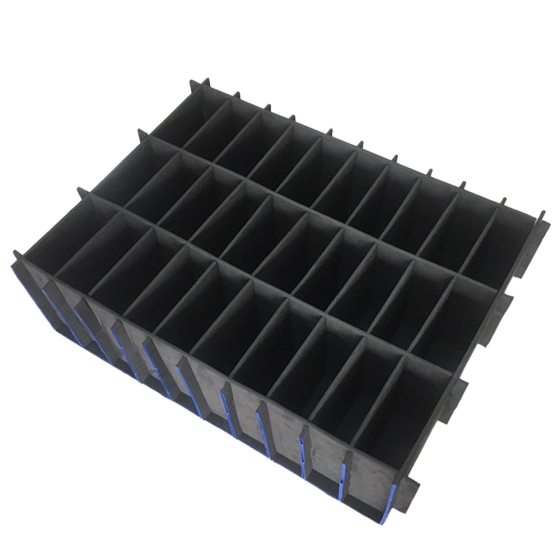
- Foldable box with dividers: Optional internal separation for parts that must remain organized. For dedicated knife-card inserts, see the corrugated plastic divider product.
- Flat-return packaging: A box that can be collapsed for empty return or interim storage after unloading.
- Custom access panels: Hand holes, label areas or openings can be considered when shown on the approved drawing.
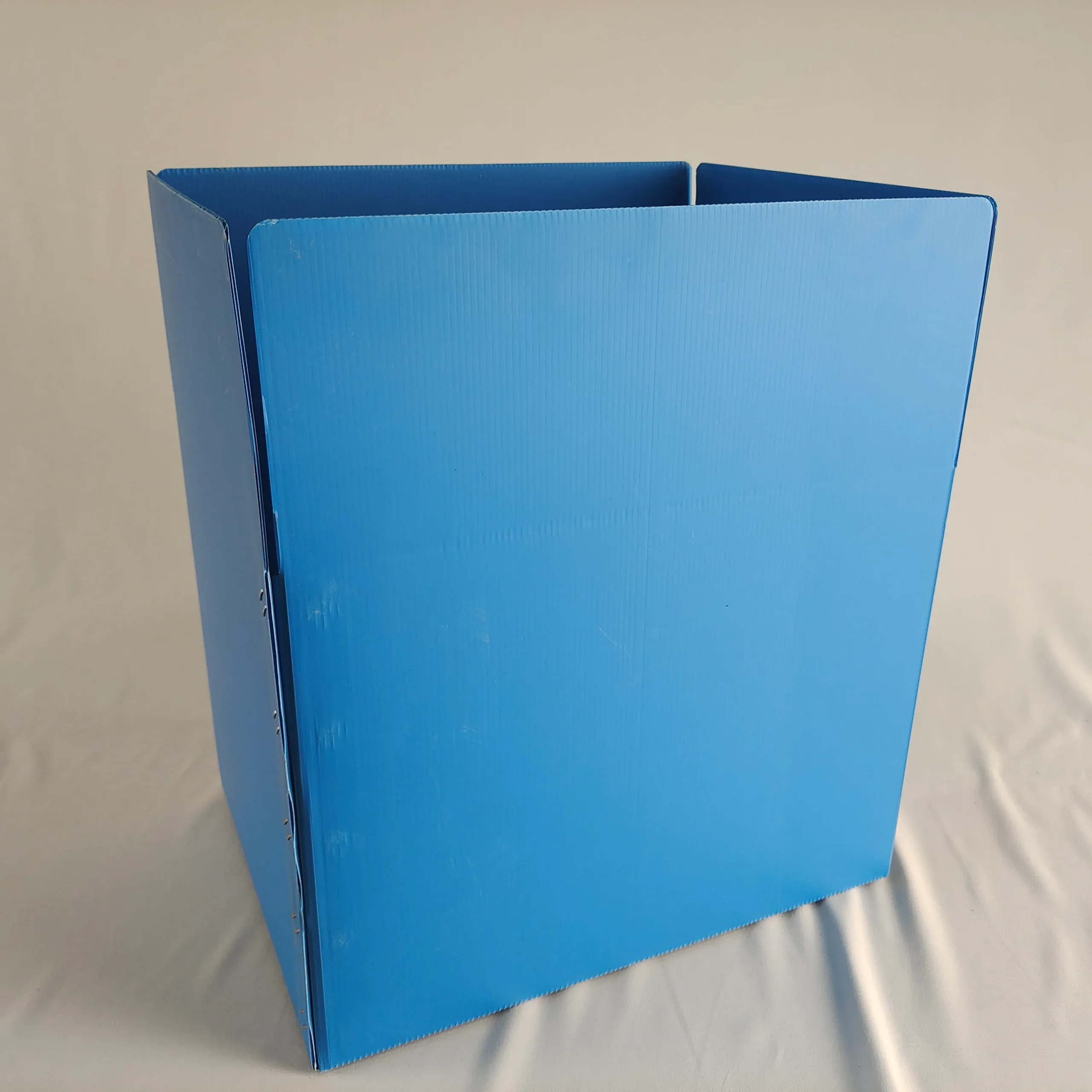
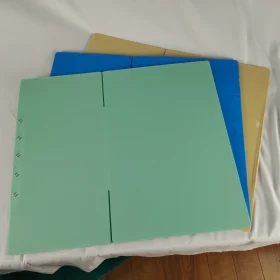
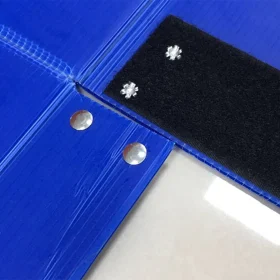
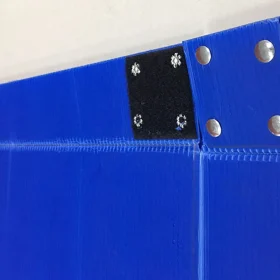
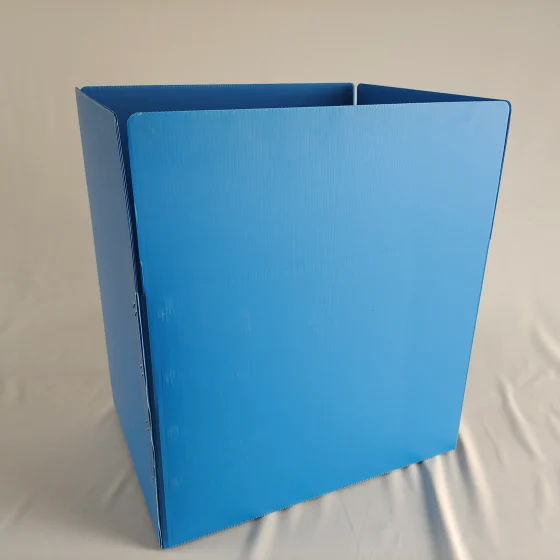
Existing products such as the general corrugated plastic box and the corrugated plastic divider serve different roles. A foldable tote describes the box body and its collapse function; a divider is an internal insert. The gallery shows an erected-box example and a separate flat-folded example. These illustrate different forms, rather than the same-size sample or a matching production batch. The fastener and seam close-ups illustrate connection details; the approved design determines which details apply to your box.
Key Specifications to Confirm
| Specification | What to provide | Why it matters |
|---|---|---|
| Internal dimensions | Usable length, width and height after assembly | Sets the product fit and panel layout |
| Fold direction | Panels that fold inward, outward or in a defined sequence | Controls empty-return shape and opening method |
| Material and thickness | PP hollow sheet grade, color and requested thickness | Matches stiffness, surface and application needs |
| Connection details | Crease, rivet, weld, hook-and-loop or another approved detail | Determines assembly, repair and repeated handling behavior |
| Load and handling | Part weight, stacking method, lifting method and line-side process | Guides structural review and accessory selection |
| Accessories | Lid, handle, label holder, divider or closure | Allows optional features to be reviewed with the sample |
Foldable vs Fixed Corrugated Plastic Boxes
A foldable box is useful when empty containers must return or wait in storage. A fixed box may be preferable when the container stays assembled, needs a rigid permanent shape, or follows a different production workflow. The choice depends on return logistics, access, part protection, stacking and the approved drawing. Compare both structures in the foldable vs fixed corrugated plastic boxes guide.
Application Scenarios
Potential uses include automotive component transfers, appliance and hardware kits, warehouse picking and supplier-to-factory return loops. Confirm how parts are loaded, lifted and removed, whether empty boxes travel back, and where they wait between cycles. Static-sensitive electronics require a separately specified and verified ESD material; a standard PP tote is not automatically ESD-safe.
How the Custom Process Works
- Send the product dimensions, container requirements, drawing or physical sample.
- Confirm material, thickness, crease layout, folding sequence and optional accessories.
- Review a drawing or sample for fit, opening, closure and handling details.
- Approve the production specification and packing method before the order is scheduled.
For quotation preparation, use the custom PP corrugated box quotation guide. It helps buyers prepare the dimensions, quantity, material, accessories and delivery information needed for a clear review.
RFQ Checklist
- Part drawing or sample, dimensions, quantity per box and total packed weight.
- Required usable internal size, external size limits and pallet layout if applicable.
- Empty-return workflow, folding sequence, stacking and lifting requirements.
- Requested PP sheet thickness or sheet weight, or ask us to propose options for sample review.
- Handles, divider layout, printing artwork, hook-and-loop fasteners and dust-cover requirements.
- Order quantity, destination and delivery needs. MOQ and lead time are quoted after design review.
Inspection Points Before Repeated Use
Inspect the assembled dimensions, fold lines, corners, connection points, closure and optional accessories against the approved drawing or sample. Check that the box opens and collapses as intended and that the internal space fits the specified parts. The corrugated plastic box inspection checklist provides a practical set of checks for receiving and trial use.
Short FAQ
Can the box be made from a customer drawing?
Yes. Jinmai can review a customer drawing, sample or confirmed dimension list and then confirm the folding layout, material and optional accessories before production.
Can a collapsible tote include dividers?
Yes, dividers can be reviewed as an optional internal insert. The divider design should be checked against the tote’s usable internal dimensions and the parts being loaded.
Can I choose the connection method?
Connection details depend on the drawing, material and handling requirements. Rivets, welds, crease lines or other details may be considered subject to sample review.
How should load requirements be specified?
Provide the part weight, distribution, stacking method, lifting method and handling frequency. Jinmai will review the structure against the provided application rather than applying a universal load value.



WhatsApp
Scan the QR Code to start a WhatsApp chat with us.