 ジンマイプラスチック

Choose a foldable corrugated plastic box when compact empty returns or storage can justify the handling needed to collapse and reopen it. Choose a fixed box when frequent access, immediate reuse and an assembled interior suit the operation. Compare the complete return pack, labor, product protection and validated box design before deciding.
A box can spend much of its route carrying nothing. After a delivery, it may wait beside a production line, occupy a warehouse location or travel back to the supplier. That empty stage matters when you compare foldable vs. fixed corrugated plastic boxes.
The useful question is how each design performs through a complete reuse loop: preparation, loaded movement, unloading, empty return and readiness for the next load. This guide provides a comparison table, a return-volume method and a worksheet for pricing both options on the same basis.
What do “foldable” and “fixed” mean in this comparison?
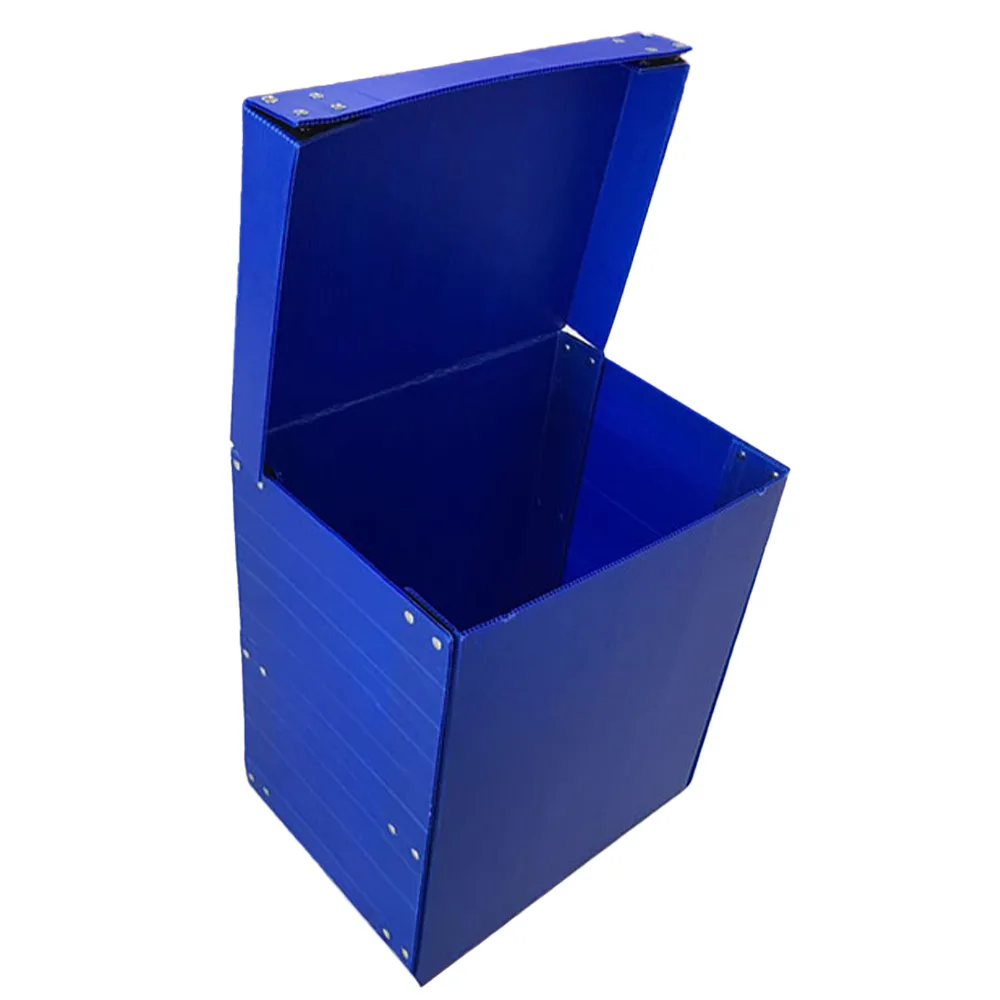
Both formats can be made from corrugated polypropylene, also called PP hollow sheet. Here, foldable means a box designed to collapse between uses. Fixed means a box intended to stay assembled during normal use and empty return.
Confirm the actual construction. A foldable box may use creases, tabs, fasteners or a removable component. Factory flat-pack describes the initial delivery state; repeated folding describes what happens during reuse. A fixed box might arrive as a flat blank for initial assembly, even though operators keep it erected afterward. Some assembled designs can nest. Record each option’s actual return state and the handling needed to achieve it.
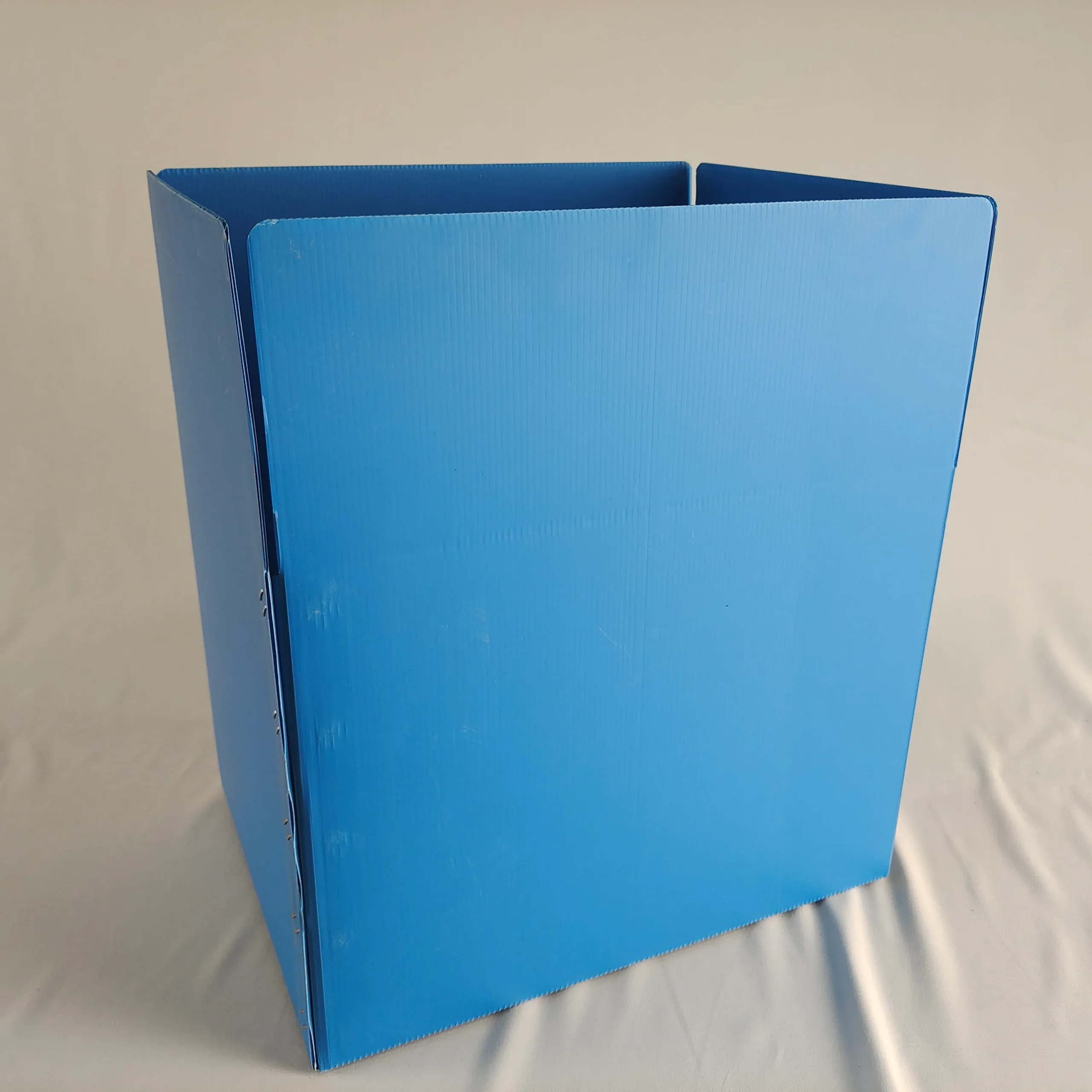
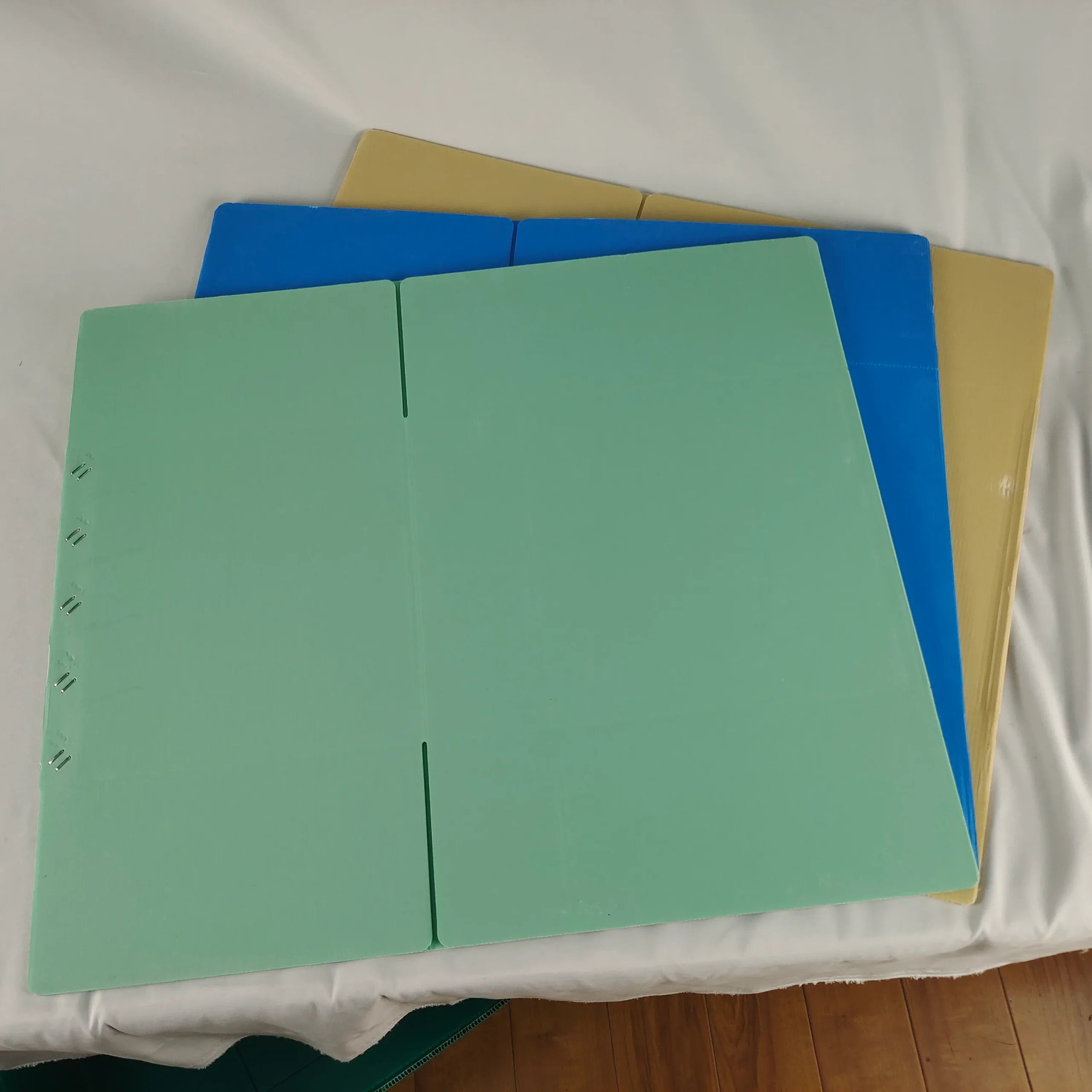
Separate Jinmai samples shown erected and flat. These photographs illustrate configurations; they are not a measured before-and-after volume comparison.
Foldable vs. fixed corrugated plastic boxes at a glance
| Decision factor | Foldable design | Fixed design | What to verify |
|---|---|---|---|
| Empty return | Can reduce the space occupied when collapsed | Stays assembled; some designs may nest | Complete return-pack dimensions and boxes per pallet |
| Setup and handling | May require collapse, erection and closure checks | Usually ready to load after routine inspection | Incremental operator time for the actual work sequence |
| Product fit | Folds, closures and removable inserts must locate correctly after setup | Interior remains assembled between uses | Clearances with the actual product and divider set |
| Line-side use | Useful where empties accumulate before collection | Useful where containers are unloaded and refilled frequently | Available space, refill frequency and operator access |
| Dividers and lids | May stay attached, fold or return separately | Can remain in their operating positions | Component control, packing volume and missing-part risk |
| Load and stacking | Depends on the complete assembled design | Depends on the complete assembled design | Evidence for the specified contents, support and stack |
| Repeated use | Inspect folds, closures and joints as specified | Inspect joints, edges, handles and other working parts | Agreed inspection, repair and retirement rules |
The table identifies design questions. It does not assign a higher load rating or longer service life to either format.
When does a foldable box make sense?
Start with foldable options when empty boxes regularly travel between sites, wait for collection or occupy constrained storage space. Check whether the collapsed configuration allows fewer billable handling units, fewer return loads or a storage reduction that the operation can actually use.
Map what happens to every component. An outer box may fold neatly while its rigid divider, lid or protective insert still needs a separate stack. Removing, sorting and reinstalling those parts takes time. Include that work in the trial and measure the entire return shipment.
Folding instructions should be practical for the people doing the job. Try the sample with the intended gloves, work surface and handling method. Count closure steps, check whether a part can be trapped, and identify how an operator recognizes a correctly erected box.
When does a fixed box make sense?
A fixed design is a useful starting point for containers that remain at one workstation, move short distances within a facility or receive another load soon after unloading. Keeping the box assembled can simplify repeated access and preserve the position of fitted inserts.
Compare its real empty arrangement. If a design nests, measure the height added by each nested box and check whether lids or dividers prevent nesting. If empties travel in unused space on an existing vehicle, establish whether folding would change the transport charge or create usable capacity elsewhere.
An assembled box still needs engineering review. Wall spans, joints, handles, closures and the supporting pallet or shelf affect its suitability. Use the corrugated plastic box load-capacity checklist to define the required evidence for either design.
How to measure the empty-return volume
Compare the same number of boxes, with the same required accessories, ready for the same transport service. Photograph and record each finished return pack.
- Define what returns. Include the outer boxes, lids, 仕切り, inserts and any reusable handling equipment.
- Build the actual return pack. Use the proposed bundles, master cartons, パレット, straps and edge protection. Record how operators secure it.
- Measure the outside dimensions. Record individual folded dimensions for design control, then measure each complete palletized or otherwise secured return unit. Include the pallet and anything extending beyond the pack. Record gross weight and box count per handling unit.
- Check the loading plan. Confirm permitted stack height, orientation, 重さ, access and whether the carrier accepts stacking on the load.
- Compare equal quantities. If one pallet holds different quantities in the two formats, calculate the complete shipment for the chosen box count.
For each rectangular handling unit:
Packed volume = outside length × outside width × outside height.
Use one unit system throughout. Dimensions in meters give cubic meters; dimensions in inches give cubic inches, which can be divided by 1,728 for cubic feet. Add the volume of every handling unit, including any separate accessory packs.
Return-volume reduction (%) = [1 − (total folded shipment volume ÷ total fixed shipment volume)] × 100.
This calculation requires the same box quantity in both shipments and a positive fixed-shipment volume. A negative result means the proposed folded packing arrangement occupies more volume. Keep the photographs, measurements and packing count with the calculation so another person can reproduce it.
Why less volume may produce a different freight saving
Transport charges depend on the service and rate agreement. For example, FedEx’s dimensional-weight guidance explains that relevant package charges use dimensional or actual weight, whichever is greater. The carrier’s current service rules determine the calculation and rounding.
For palletized or consolidated returns, obtain quotes using the confirmed dimensions, gross weight, pallet count and stackability. Ask how minimum charges, accessorial fees and available vehicle capacity affect the result. A volume reduction only becomes a freight saving when the priced shipment changes.
Keep initial delivery and repeated empty returns separate in the comparison. Factory flat-pack shipping may be a one-time event; collapse and reassembly during a returnable program can happen on every loop.
Compare return freight with setup labor
Use the same route, shipment quantity, service level, quote period and included fees for both options. Add any packaging preparation or handling cost outside the carrier quote once, in the appropriate cost line.
The following is hypothetical arithmetic, using assumed quotes and operating inputs. It is not a Jinmai price, measured customer result or product performance claim. Both quotes cover 100 empty boxes with all required accessories, on the same route, 日付, transport mode and fee basis. Each quote reflects its own confirmed packing arrangement and stackability. One complete loop includes the loaded trip, empty return and preparation for the next use.
| Assumed input for 100 boxes | Amount |
|---|---|
| Fixed-box empty-return quote, total | $120 |
| Folded-box empty-return quote, total | $85 |
| Return-freight difference | $35 saved |
| Extra collapse, setup and closure-check time for the folded option | 40 seconds total per box per loop |
| Fully loaded labor cost | $24 per hour |
| Extra repair-material, replacement and loss allowance for the folded option | $0.04 per box per loop |
With these assumptions:
- Extra labor = 100 × 40 ÷ 3,600 × $24 = $26.67 per loop.
- Extra repair, replacement and loss allowance = 100 × $0.04 = $4.00 per loop.
- Modeled operating saving before purchase-price differences = $35 − $26.67 − $4.00 = about $4.33 per 100-box loop.
The remaining margin is small. An additional 10 seconds of handling per box would add about $6.67 per loop at the same labor rate, changing the result to approximately $2.33 more operating cost for the folded option.
The 40 seconds covers incremental collapse, next-use setup and closure checks. The $0.04 allowance excludes labor; other handling, repair labor, inspection and storage costs are assumed equal. The example also assumes the same protection and usable capacity. It excludes purchase-price differences, financing, taxes, residual value and downtime. For an investment decision, compare those items, expected completed loops, fleet quantity, cleaning and any other costs that differ. Count each expense once, using the same boundary for both options.
What can change the decision during a sample trial?
Test the whole working sequence before approving the structure. A box that looks convenient while empty may be awkward to load, close or return with its accessories.
| Trial check | What the buyer should record |
|---|---|
| Product loading and removal | Quantity, orientation, clearance and whether operators can remove parts without damaging them |
| Collapse and setup | Steps, total incremental time, tools and likely assembly errors |
| Dividers and lids | Retention, alignment, separate packing and how loose components are counted |
| Handling and stacking | Gross loaded mass, support, contact arrangement, duration and agreed acceptance criteria |
| Empty-return pack | Outside dimensions, gross weight, 量, protection and securing method |
| Repeated operation | Inspection points, observed wear, sample history and the agreed test scope |
Document the assembled and return states in the approved drawing. Include closure positions, divider revision and the packing method. The box drawing and tolerance guide explains how to turn those requirements into a supplier review.
Agree the test conditions and acceptance criteria with the responsible packaging or quality team. A successful setup demonstration does not establish a service life. Record the actual repetitions and conditions when reporting any repeated-use trial.
Download the foldable vs. fixed comparison worksheet
Use one worksheet for one route and a matched pair of box proposals. It includes fields for dimensions, return quantities, freight-quote references, handling time, labor cost, purchase price and sample evidence.
Download the blank comparison worksheet (CSV)
The entries are blank so the buyer and supplier can use their own measurements and quotations. The worksheet is a comparison record; it contains no preset freight saving, load rating or service life.
For a useful first inquiry, send Jinmai:
- Product dimensions, 重さ, quantity per box and any surface-protection requirements.
- Required inside dimensions, outside limits, divider layout, lid and handle needs.
- Loaded route, unloading process, empty storage and proposed return method.
- Stack and support arrangement, operating environment and required evidence.
- Order quantity, delivery destination and preferred initial shipping state.
Jinmai’s corrugated plastic box range includes foldable and fixed structures with configurable lids, handles and dividers. Request both proposals against the same brief, then compare the samples and complete packing details. The custom box quotation guide covers the information needed to prepare that request.
Request a foldable and fixed box comparison
Buyer questions
Are foldable corrugated plastic boxes always cheaper to ship?
Savings depend on the finished return pack and the transport quote. Lids, 仕切り, protective packing, 重さ, minimum charges and pallet arrangements can affect the result. Compare equivalent shipments and include any extra handling cost.
Are fixed corrugated plastic boxes stronger?
The format name does not establish strength. Compare the complete box designs and evidence for the required contents, support, stack and use conditions. Two boxes made from the same sheet thickness can have different dimensions and load paths.
Can a foldable box have dividers?
Dividers can be designed to remain attached, collapse or return separately. Confirm product clearance after assembly and account for all divider components in the empty-return pack. A removable divider also needs a way to prevent loss or revision mixing.
Does “flat-pack” mean the box is designed for repeated folding?
Flat-pack describes a shipping state. It can refer to an unassembled blank, a component kit or a box designed to collapse repeatedly. Ask which construction is offered and what evidence supports the intended reuse pattern.
Which measurements should appear in the quotation?
Include assembled inside and outside dimensions, the collapsed or nested state where applicable, boxes per pack, complete pallet or carton dimensions and gross weight. Identify how lids, dividers and protection are included.
How many times can the box be reused?
Request evidence for the specified construction and operating conditions. Material alone does not define a reuse count. Inspection, handling, cleaning, product load, closure wear and loss from the return route all affect the usable life of a box program.
For buyers comparing returnable box formats, a custom foldable corrugated plastic box can be reviewed alongside the トートバッグ / Pallet Boxes category. Confirm the drawing, collapsed form, load and handling requirements before selecting a structure.
Sources and method
This is a buyer planning guide. The measurement workflow and comparison worksheet organize project-specific decisions. Photographs show product configurations; the cost example uses hypothetical inputs. Ratings, savings and service life require evidence for the selected box and route.
- FedEx: What is dimensional weight? — package rating context; confirm the current rules for the chosen service.
- Jinmai: Corrugated plastic box product specifications — available structures and customization options.
Sources reviewed October 12, 2026. Prepared by Jinmai Plastic Editorial Team.